Alinari
- lavora con noi
- contatti
- login
- itaeng
Paris-Rome. Capitals reflected in the photographs from the Alinari Archives
This exhibition celebrates the 70th anniversary of the twinning of Paris and Rome, formalised in 1956.
Through 42 photographs, the exhibition explores the parallels between the two cities, highlighting their shared cultural roots and similarities, while also drawing attention to the characteristics that make them unique. The selection has been curated so that it can be appreciated at a glance. It aims to convey the profound, intangible affinities that led to the unique twinning of the two cities through the concise language of the visual arts, which is sometimes harder to define in words. The exhibition presents the two capitals from the mid-19th century to 1956 through a play of mirrors.
Urban landscapes: similarities


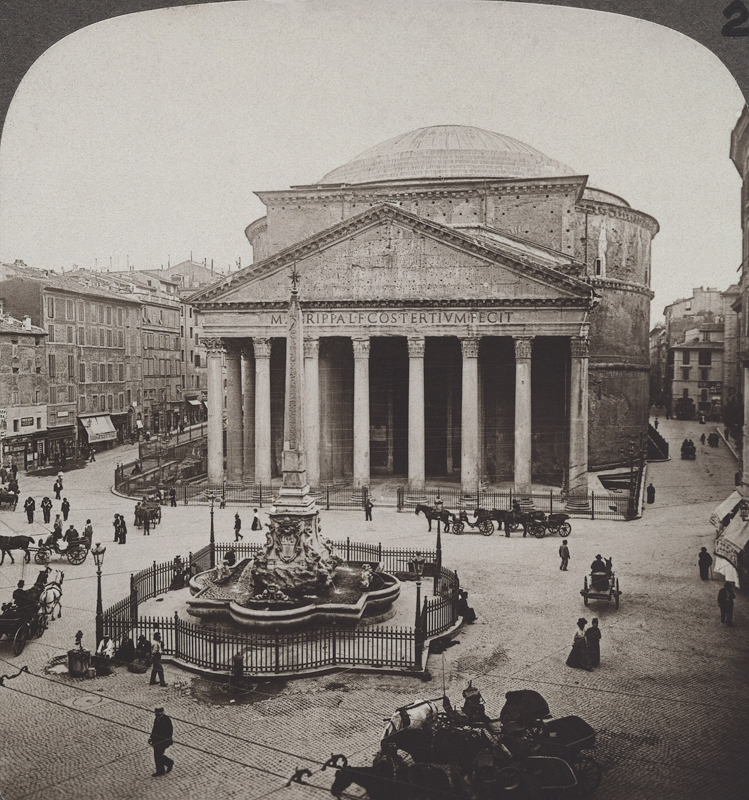


Paris and Rome are undoubtedly two of the most photographed cities in the world. Since the 1840s, their extraordinary beauty has inspired generations of photographers to capture images of the two cities and spread their portraits across the globe.
Through photographs taken by leading Italian and French photographers in the 19th and 20th centuries, the sites and monuments of Paris and Rome engage in a dialogue through their geometries, typological similarities and landscapes. In photographic diptychs, Paris and Rome mirror each other, sometimes blending together and sometimes standing apart. The images show archaeological excavations, domes, triumphal arches, bridges and monuments that have become iconic worldwide.
A striking example of this is the photograph from 1870 depicting the official visit to the archaeological excavations at the Arènes de Lutèce in Paris. Between 1860 and 1869, the Roman structures of the Arènes de Lutèce were rediscovered during the construction of a tram depot by the Compagnie Générale des Omnibus. This rediscovery aroused great interest among intellectuals, including Victor Hugo, leading to the formation of a conservation committee known as the Société des Amis des Arènes.
Urban landscapes: variations


The rhythm of the diptychs also features variations and shifts in meaning, designed to evoke the extraordinary richness of content, atmosphere and history.
Thus, different monuments serve as backdrops to particularly significant historical episodes, with two images juxtaposed to depict the Paris Commune and the Capture of Rome, respectively.
During the Paris Commune (18 March – 28 May 1871), a period of self-governance in the French capital, photography played an important role. The Communards used it to document the uprising with powerful images of barricades, cannons and men in action, whilst the government in Versailles used it as a tool of condemnation: photographs depicting the devastating destruction of important city buildings were circulated for years, whilst political photomontages portrayed the Communards as bloodthirsty criminals.
The image of the barricades on Rue Royale is juxtaposed with that of Porta Pia, which was damaged by cannon fire. On 20 September 1870, the army of the Kingdom of Italy entered Rome through a breach in the wall created by cannons near Porta Pia. The Papal States were definitively annexed to Italy one year later, and the capital of the Kingdom was transferred from Florence to Rome. Due to the technical limitations of photography at the time, the images of the event are very static and were not capable of documenting the action in real time.
Two particularly symbolic locations/monuments – St Peter’s Square and the Eiffel Tower – are shown in panoramic views that may surprise today’s Parisians and Romans: in the case of the Eiffel Tower, due to the presence of temporary installations, such as the "Celestial Globe" at the 1900 Paris World’s Fair; in the case of Rome, before significant urban transformations, such as the construction of Via della Conciliazione.
In the history of World Exhibitions, the 1900 Paris exhibition was one of the most successful on a global scale. For the occasion, the city undertook major modernisation works on its infrastructure and transport networks. The photograph captures two of the main attractions: the Eiffel Tower and the Celestial Globe, a large temporary structure symbolising faith in scientific and technological progress,and it was erected to herald the new century.
The stunning autochromes from the early 20th century capture the distinct atmospheric qualities of an Atlantic Paris and a Mediterranean Rome. The photograph of Notre-Dame Cathedral, for instance, was taken by the French photographer Henri Chouanard, whose work is held by the Alinari Archive alongside 1,250 other autochromes. Using this technique, which was developed by the Lumière brothers and was the first colour photographic process, Chouanard documented landscapes, monuments and customs in various North African countries and numerous European regions.
People
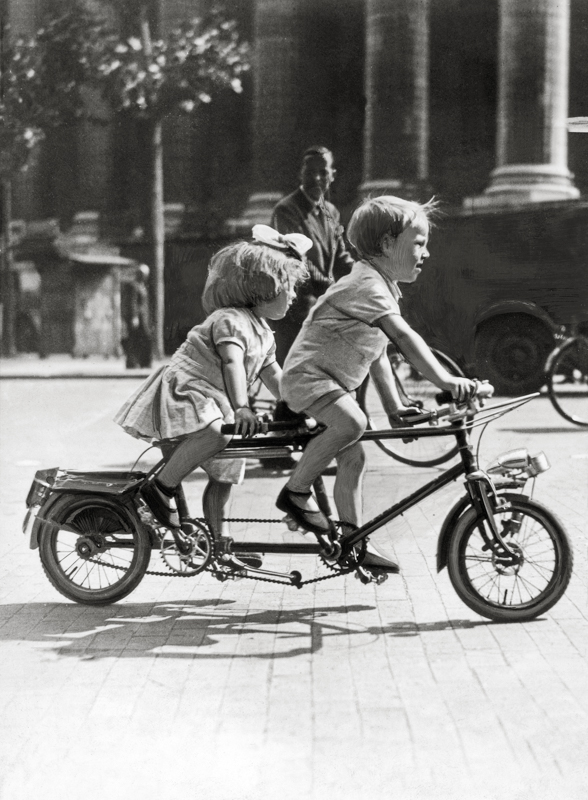


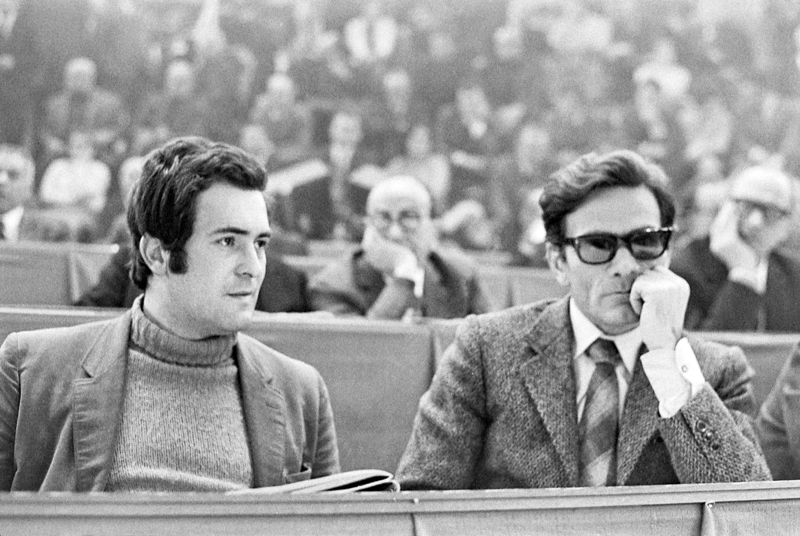
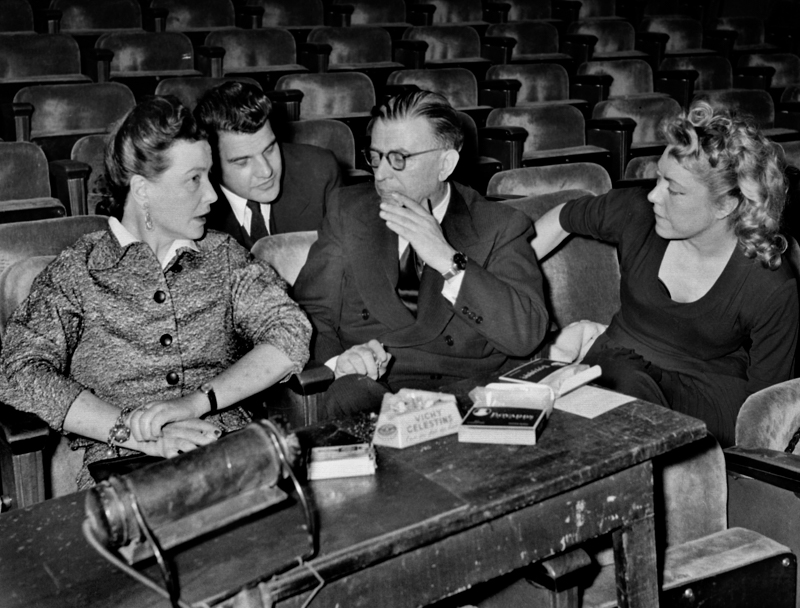
The second part of the exhibition puts people centre stage, showcasing snapshots of ordinary lives: men and women interacting, Parisians and Romans thronging markets and gardens, members of religious orders and children playing in the streets. This section features material from the French archive Le Petit Parisien and from the Roman Luigi Leoni Archive.
Le Petit Parisien consists of photographs taken by the editorial staff of the French magazine, many of which have been retouched and incorporated into photomontages. The newspaper, founded in 1876, enjoyed a vast readership in France during the early decades of the 20th century. The Alinari Archives preserve 2,591 prints.
The Luigi Leoni Archive showcases the work of the Roman photographer who, armed with his Leica camera, captured more than fifty years of Italian history. Having served in the First World War, he learnt photography at Porry Pastorel’s VEDO agency. In the first half of the 1920s, he set up his own business, documenting the most significant moments of Fascist Italy from a perspective free from official propaganda. Following the war, he became an Alitalia photographer.
This overview illuminates the two cities over the course of a century, capturing their connections – including in the field of photography – in a brief yet brilliant flash. French photographers capture Rome, while Italian photographers immortalise Paris.
From the very beginning, Fratelli Alinari has maintained close ties with Paris. The founder, Leopoldo, in particular, made frequent trips to the French capital. These trips aimed to update the laboratory's technical capabilities and promote and sell Italian art photographs in France through agents and retailers, including Bisson Frères in the 1850s. In the early 20th century, the Alinari brothers undertook major photographic campaigns at the Louvre and other monuments in Paris, including Notre-Dame.
In this interplay of reflections, references to the worlds of cinema and literature were inevitable. These are fields in which cultural exchange was particularly profound in the years leading up to, and well beyond, the twinning of the two cities.
The Institutions’ Premises: Villa Medici and the Hôtel de Galliffet


The exhibition concludes with a tribute to the institutions that facilitate cultural exchange between the two cities: the French Academy in Rome and the Italian Cultural Institute in Paris.
The French Academy in Rome is located at Villa Medici. The villa took on its current appearance from 1576 onwards when Cardinal Ferdinando de' Medici purchased the estate and commissioned the architect Bartolomeo Ammannati to extend and embellish the existing buildings and gardens. The aim was to display his prestigious collection of ancient marbles in a site of prestigious Roman origin. The villa became one of the most elegant and fashionable venues in Rome. It has been used as a residence for foreign artists in Rome since 1803, when Napoleon Bonaparte moved the Académie de France à Rome there. The academy has hosted many renowned artists and directors, including Jean-Auguste-Dominique Ingres. Today, it is a national public institution overseen by the French Ministry of Culture, occupying a unique position within Rome’s artistic landscape.
The Hôtel de Galliffet, which is now home to the Italian Cultural Institute in Paris, was built by the architect Étienne-François Le Grand between 1776 and 1792. Throughout the nineteenth century, it was frequented by notable figures: Eugène Delacroix’s father lived there, as did Monsieur de Talleyrand. It also served as the headquarters of the French Ministry of Foreign Affairs from 1794 to 1821. The hotel's magnificent rooms have welcomed notable figures ranging from Napoleon to Madame de Staël and from Chateaubriand to the poet Arnault. The Italian State purchased it in 1909 to house the embassy. Since 1962, it has been the headquarters of the Italian Cultural Institute, aiming to promote and develop relations between Italy and France in cultural and linguistic spheres.

 Le attività sono realizzate grazie al contributo concesso dalla

